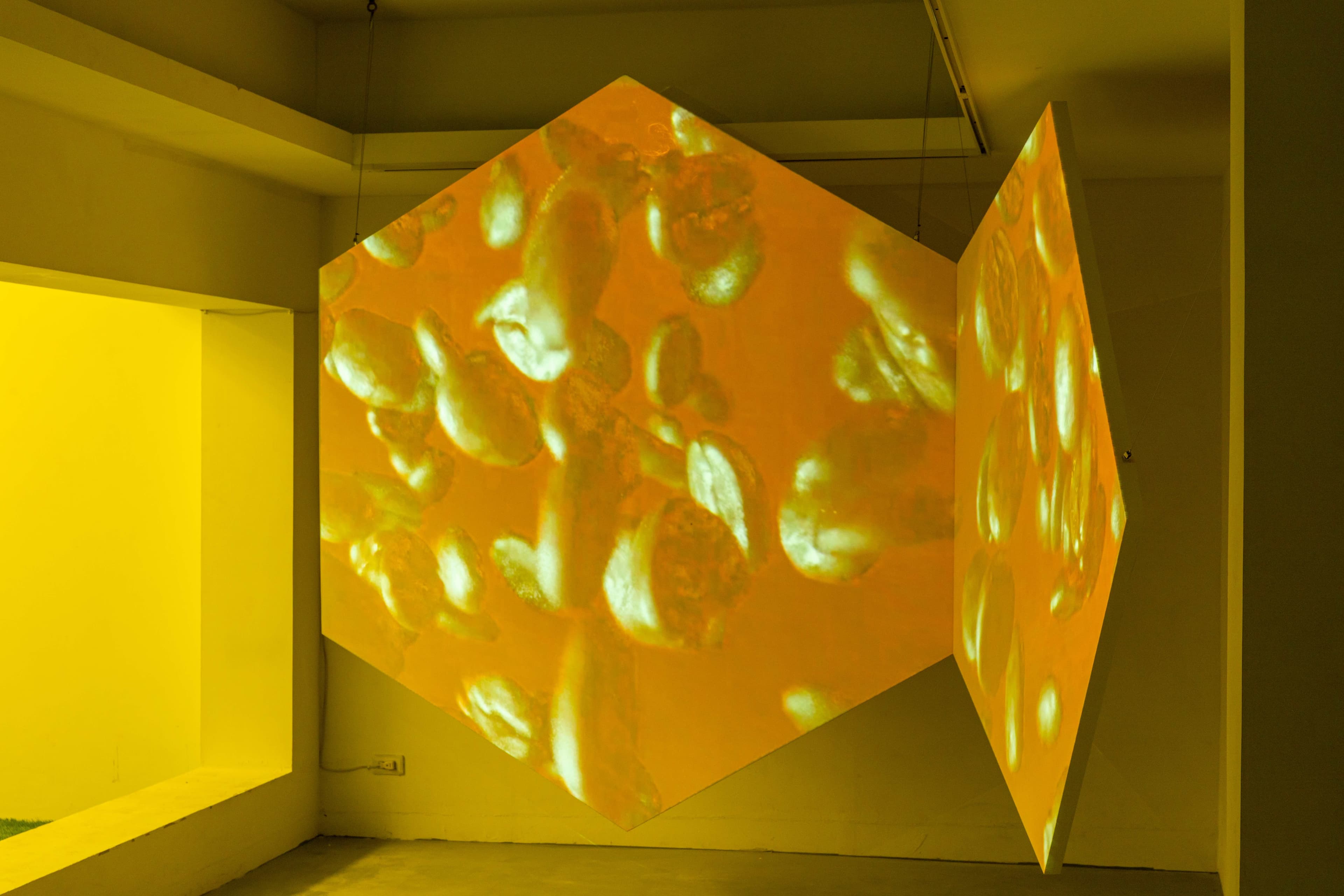
EUPHORIA, HALLUCINATION, CAFFEINE
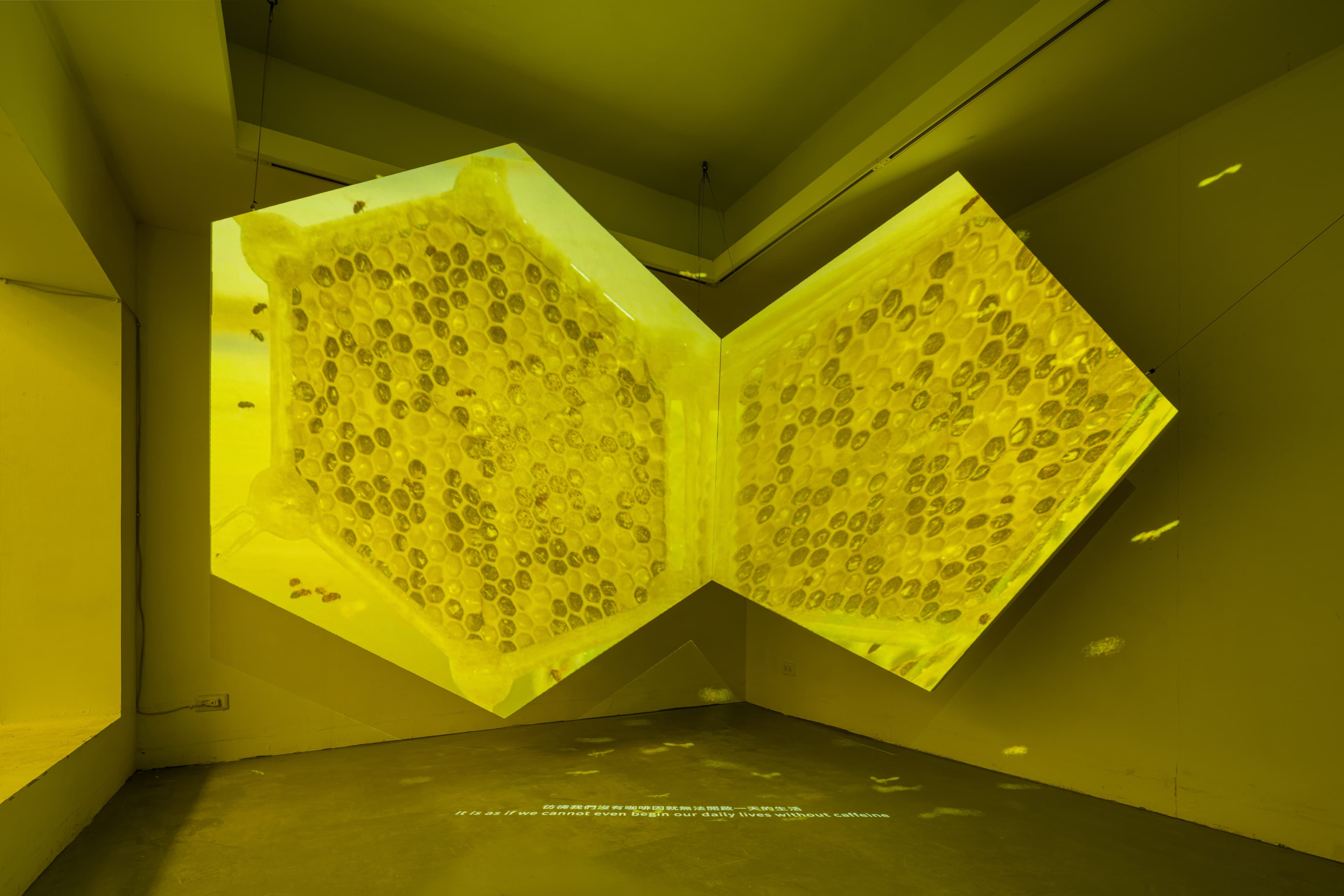
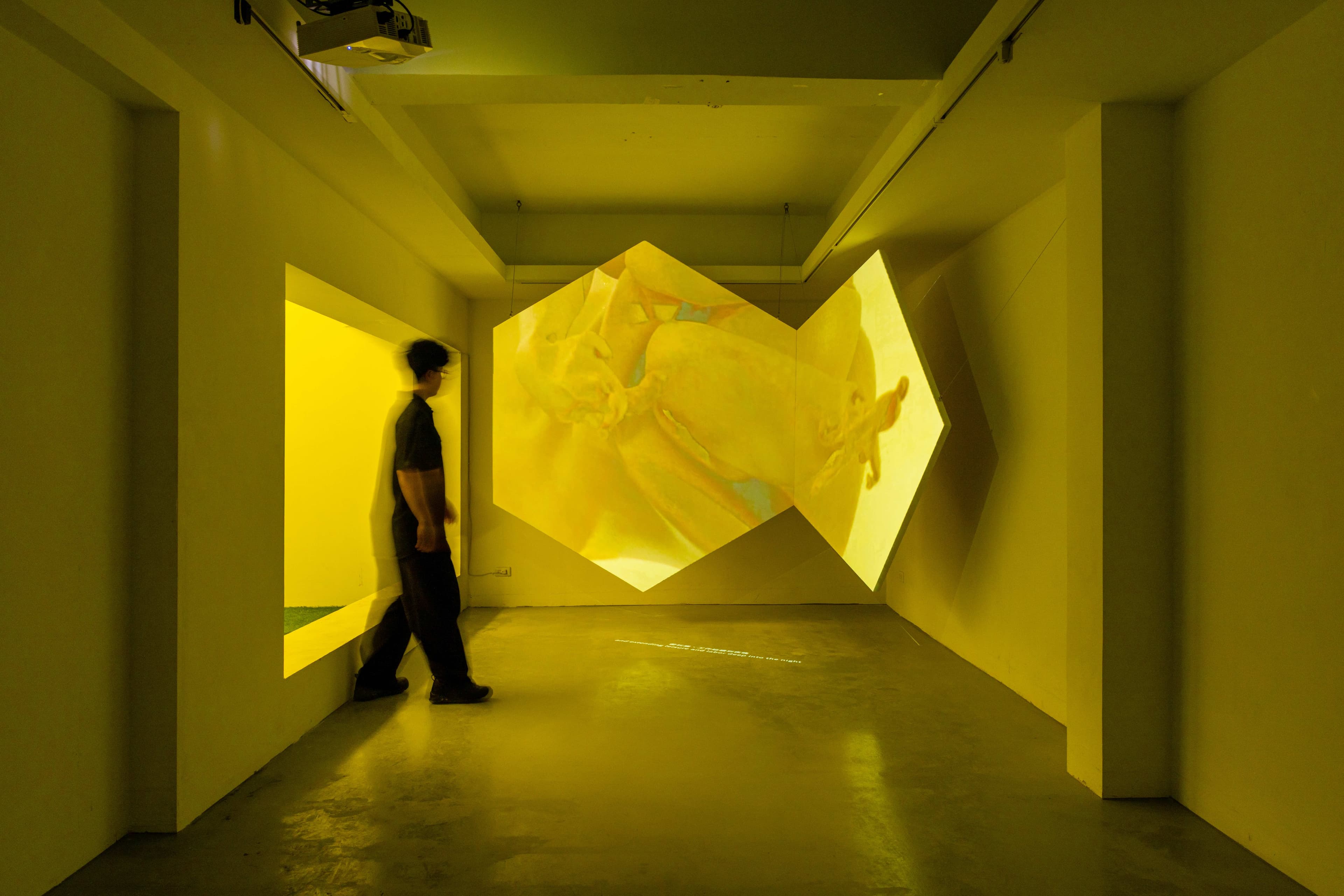
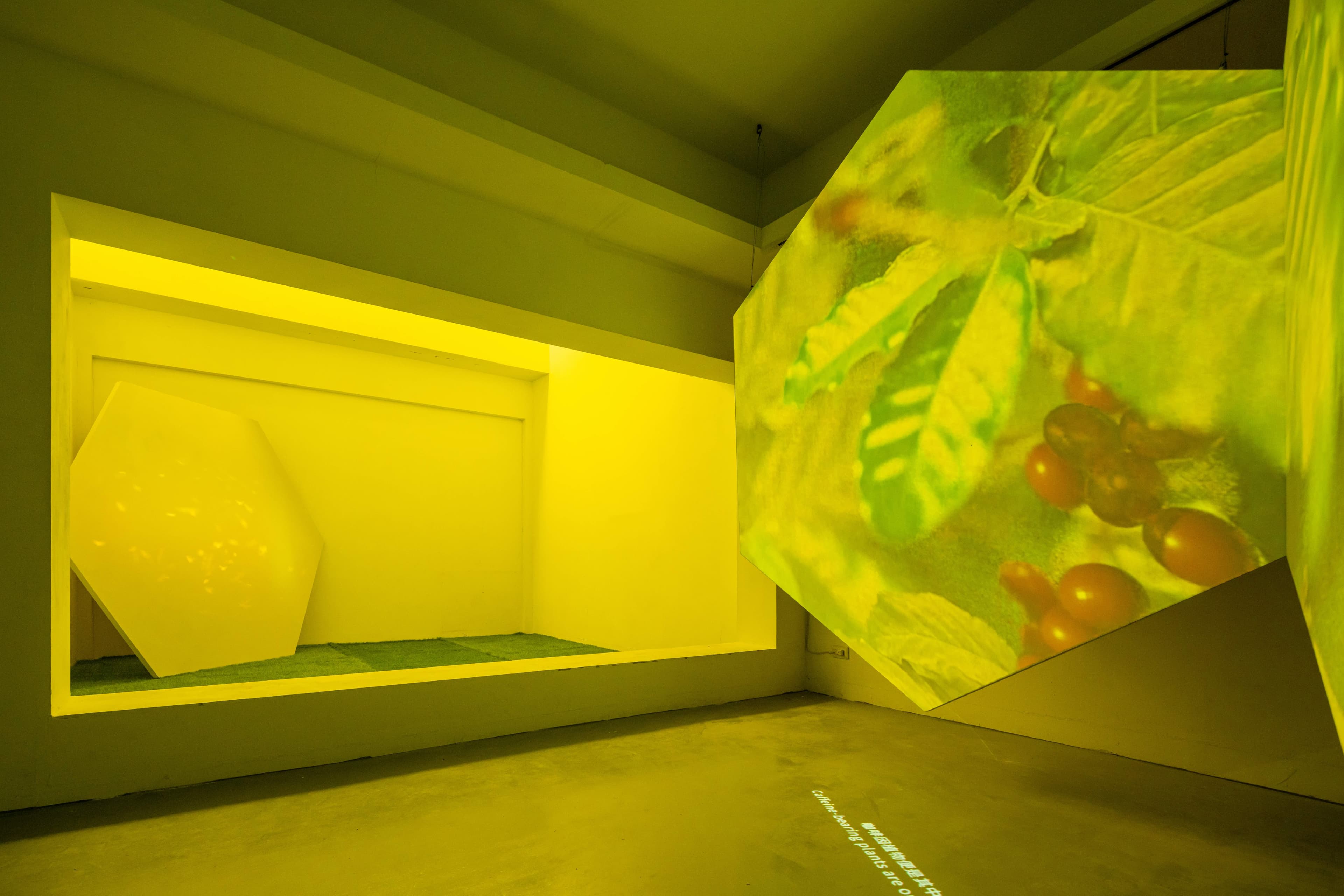
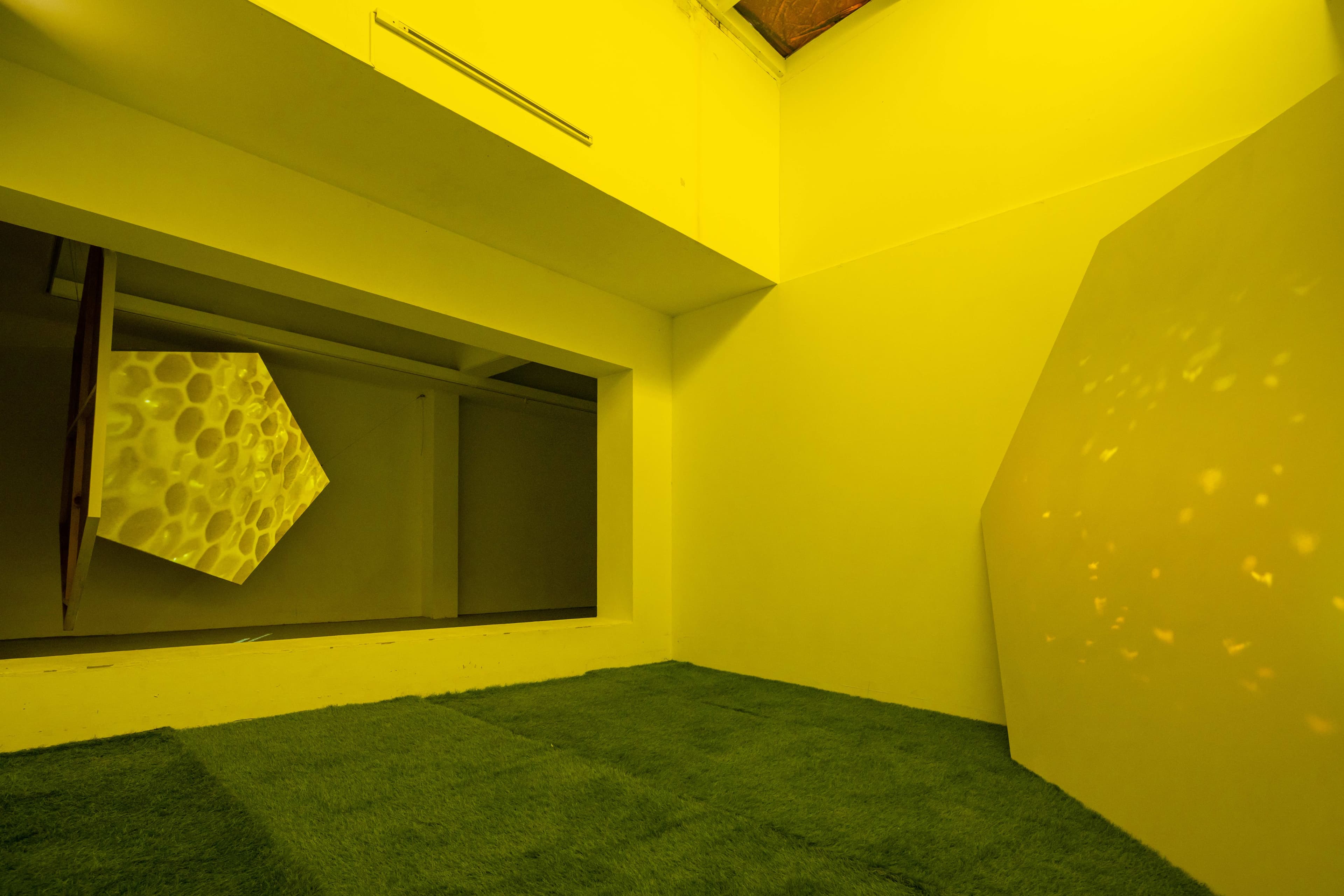
當今,人們對於助眠產品的需求越來越高,而另一方面,對於提神產品的需求亦同。今日最流行的提神產品「咖啡因」,其作為一種精神活化物質,並不像大麻、死藤水等精神活化物質那樣能夠讓人進入迷幻的世界,而是以清醒、亢奮的方式使人陷進「我們能夠依靠咖啡因克服疲勞」的幻境。《亢奮,幻覺,咖啡因》透過神秘主義、生物學與腦神經科學等角度切入,探討精神活化物質與人類之間的關係,並藉著蜜蜂對於咖啡因上癮的生理學特性,隱喻人類依靠咖啡因維持亢奮的狀態,以此反思當今社會所追求的「自由」與「績效」是否正悄悄地剝奪身體對於睡眠的渴求。
Today, the demand for sleep aids is increasingly high, matched equally by a growing need for energy boosters. As the most popular energy booster, caffeine is inherently a psychoactive substance. However, unlike cannabis or ayahuasca, which induce psychedelic experiences, caffeine operates through wakefulness and hyperarousal. It traps people in the illusion that we can simply rely on caffeine to overcome fatigue. Euphoria, Hallucination, Caffeine explore our relationship with psychoactive substances. By metaphorically linking bees' caffeine addiction to human reliance on stimulants, it asks: is our society's drive for 'freedom' and 'productivity' secretly stripping away the body's craving for sleep?