
Saros
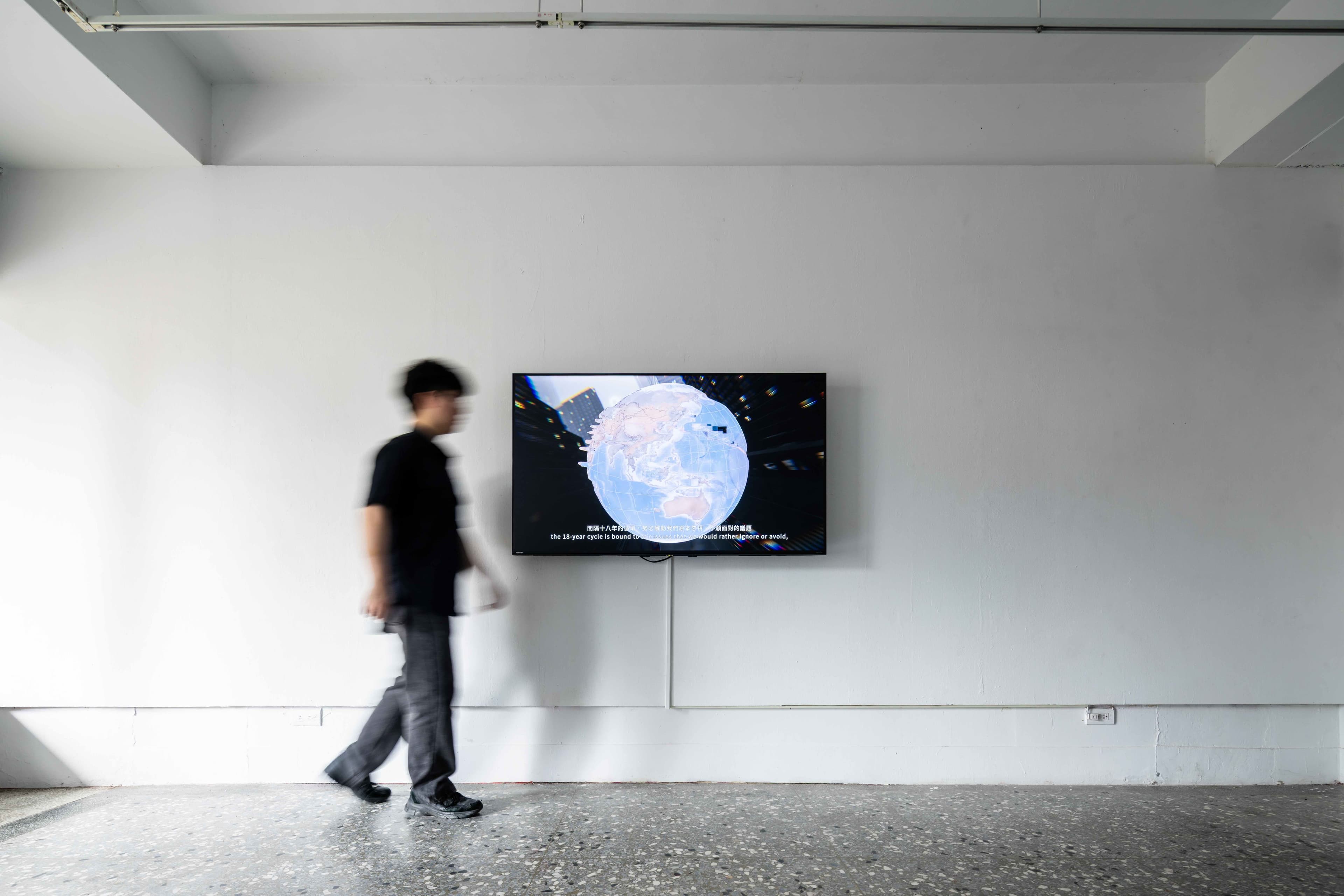
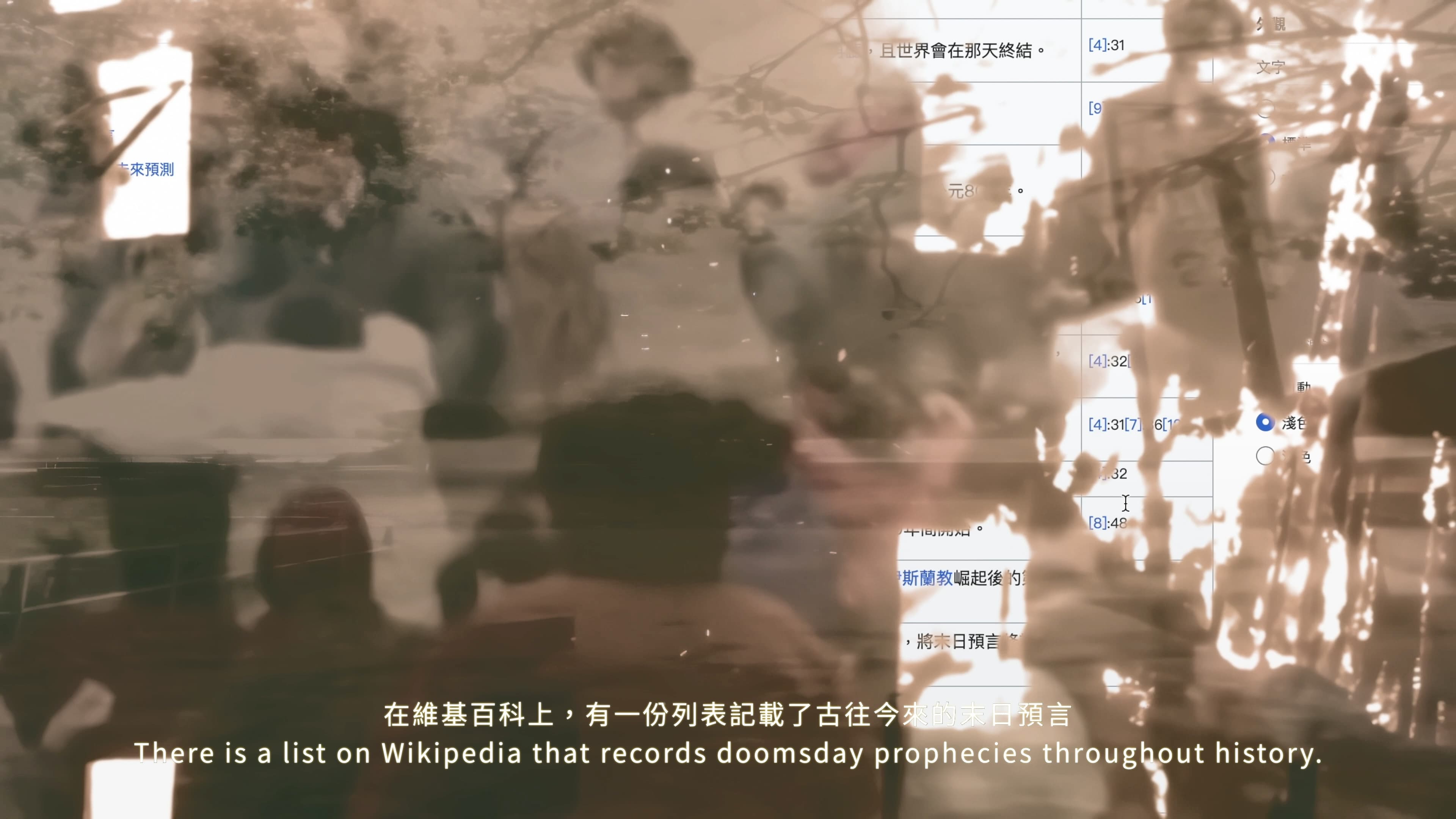
天災、戰爭、疾病與環境危機,這些關於末日的訊息正不斷滲透生活,卻始終沒有真正到來,它彷彿從來不是立即的終點,而是一種長期存在的擾動,就像一場集體的心靈逃逸,反映出人類對於外在世界的不安與焦慮。《Saros》透過仿擬網路上常見的都市傳說與陰謀論影片,串連人類歷史中關於災難和世界末日的「預測」,並藉由不同文化關於天象異變的神話與傳說,呈現從古至今不斷重複建構的終結想像,或許預言從來不揭示結果,而是一面提醒人們審視所處世界的鏡子。
Saros traces humanity’s recurring imagination of the apocalypse through myths and religious narratives of celestial anomalies. These visions, though never realized, continually permeate life, making the ending less an event than a lasting disturbance. Invoking the Ouroboros—the serpent that devours itself—the work reflects cycles of destruction and rebirth, and how humanity, amid fragility and fear, continually rebuilds its ground. The value of prophecy lies not in foretelling outcomes but in urging us to confront our relation to the world, turning unresolved threats into resistance against numbness.